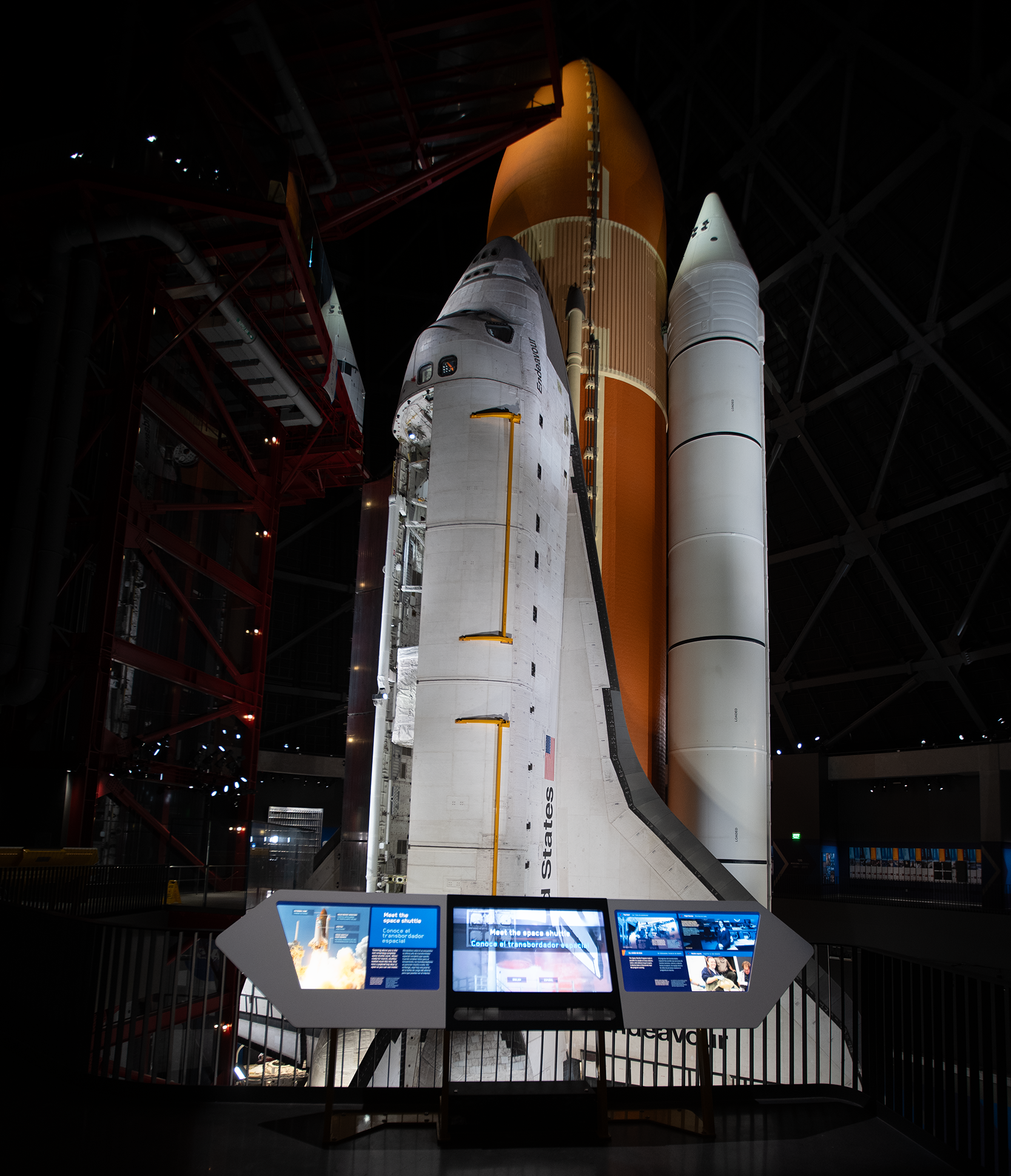
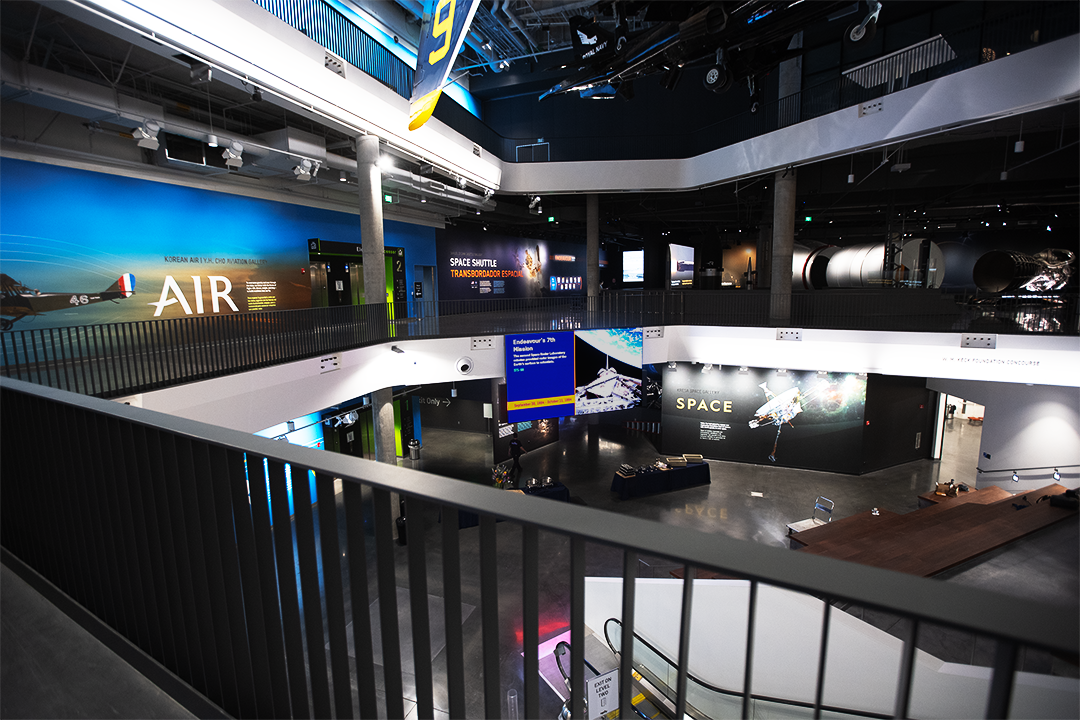
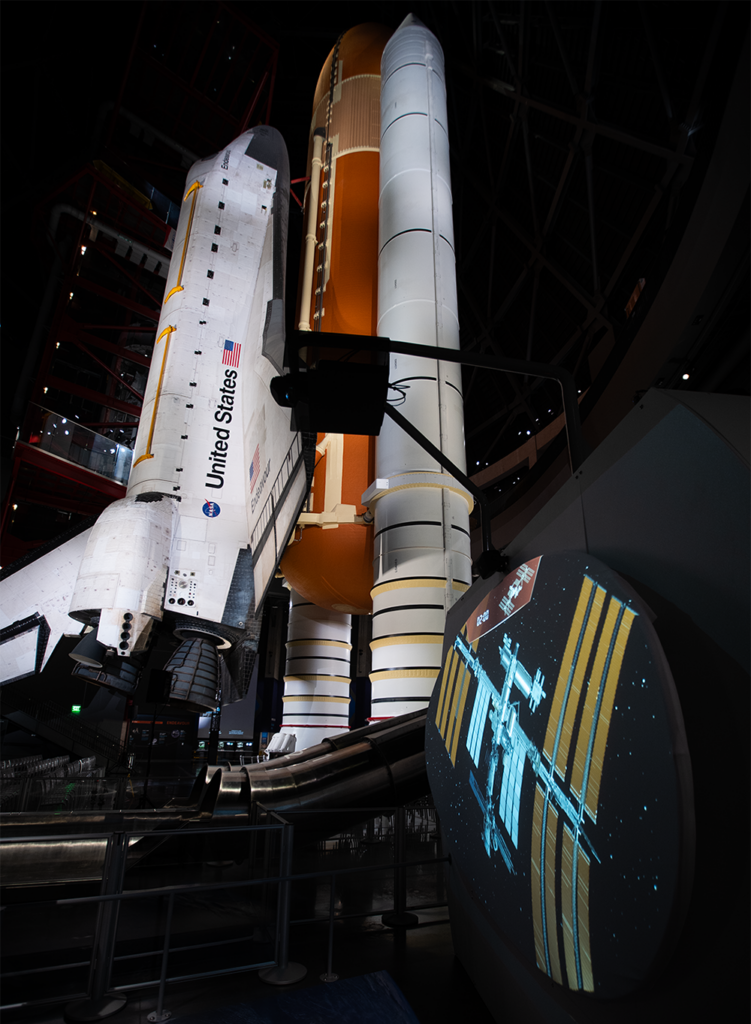
Space Shuttle Endeavour, standing upright in launch configuration, is the centerpiece of the California Science Center’s Samuel Oschin Air and Space Center. Across 100,000 square feet of aviation, shuttle, and space galleries, we created 32 interactive experiences and 17 large-screen films that invite visitors to take on the challenges of flight and space exploration themselves.
For Northern Light Productions, this was one of our largest projects to date. The work combines complex interactive simulations, immersive films and experiential media installations, many with significant 2D and 3D animation. Visitors can follow in the path of a real astronaut and navigate their way through the International Space Station, try on virtual spacesuits, program a physical rover through a fabricated Mars landscape, or join a team planning a mission beyond Earth. Throughout the many galleries, NLP’s audiovisual media gives context to dozens of air and space artifacts; breaking down the science and engineering that made them work and inspiring the next generation of scientists.
Services
- Project Management
- Content Development & Scriptwriting
- Experience & UX Design
- Software & Game Development
- Graphic/Visual Design & Development
- 2D & 3D Animation
- Editing & Sound Design
- Bilingual Media Production
- Prototyping & Visitor Testing
Living and Working in Space
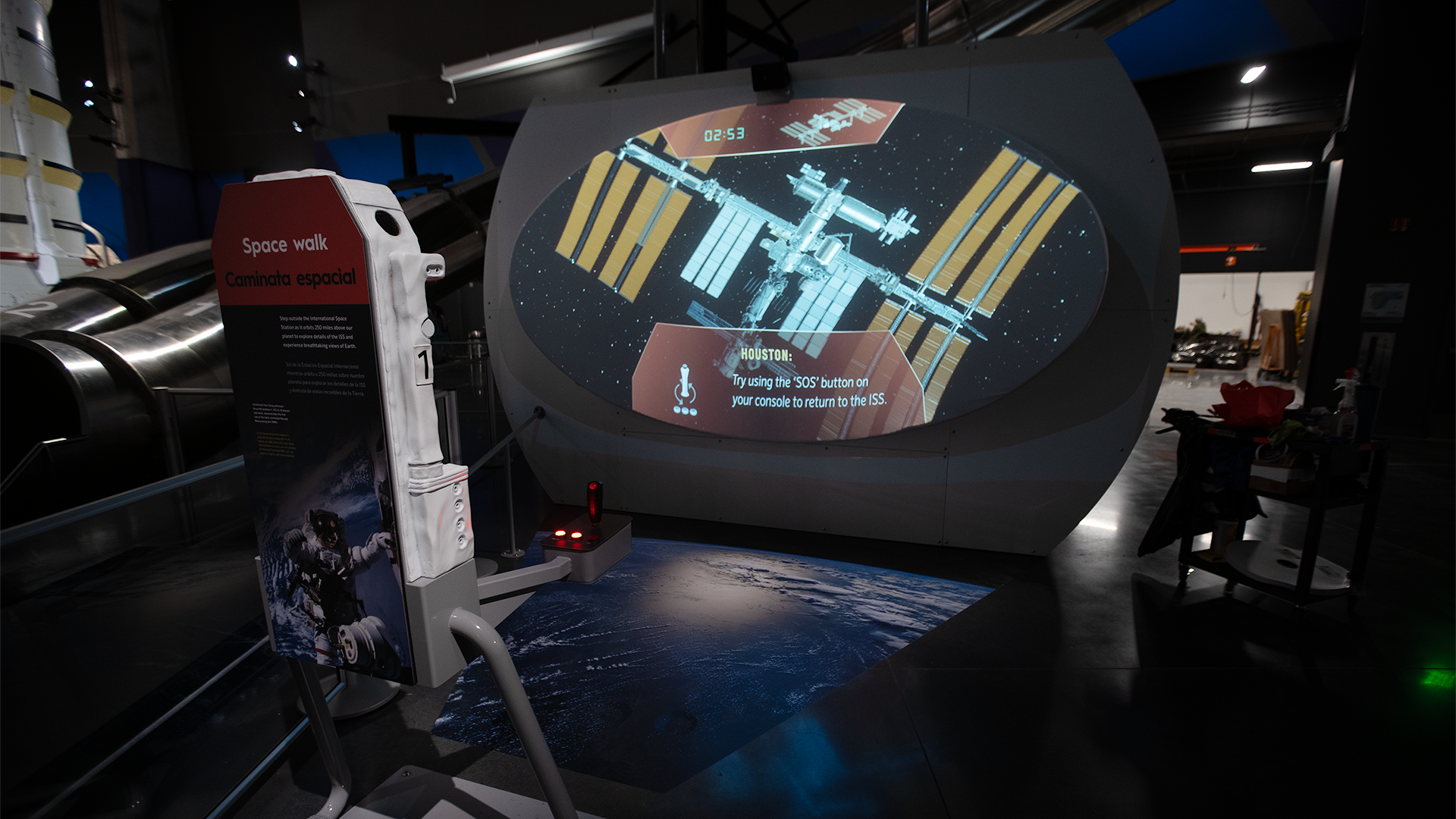
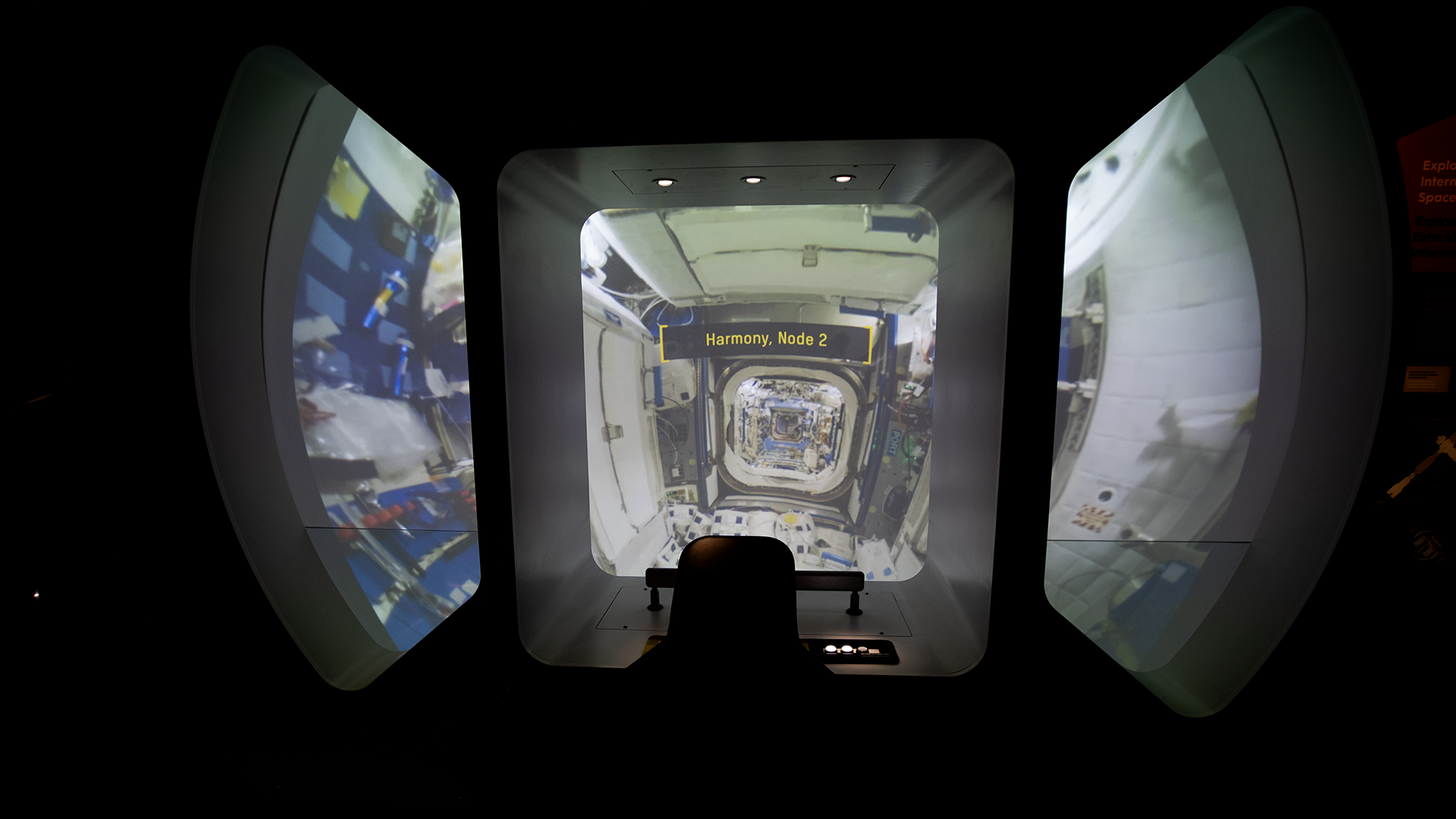
In ISS Fly-Through, visitors use hand grips to propel themselves through the International Space Station. Their pushing and pulling motions control the onscreen journey through real astronaut footage and simulates how an astronaut moves through the station’s interior. The Extra Vehicular Activity Simulation takes them outside the ISS, where they operate an astronaut’s jetpack to maneuver around the ISS against the backdrop of Earth.
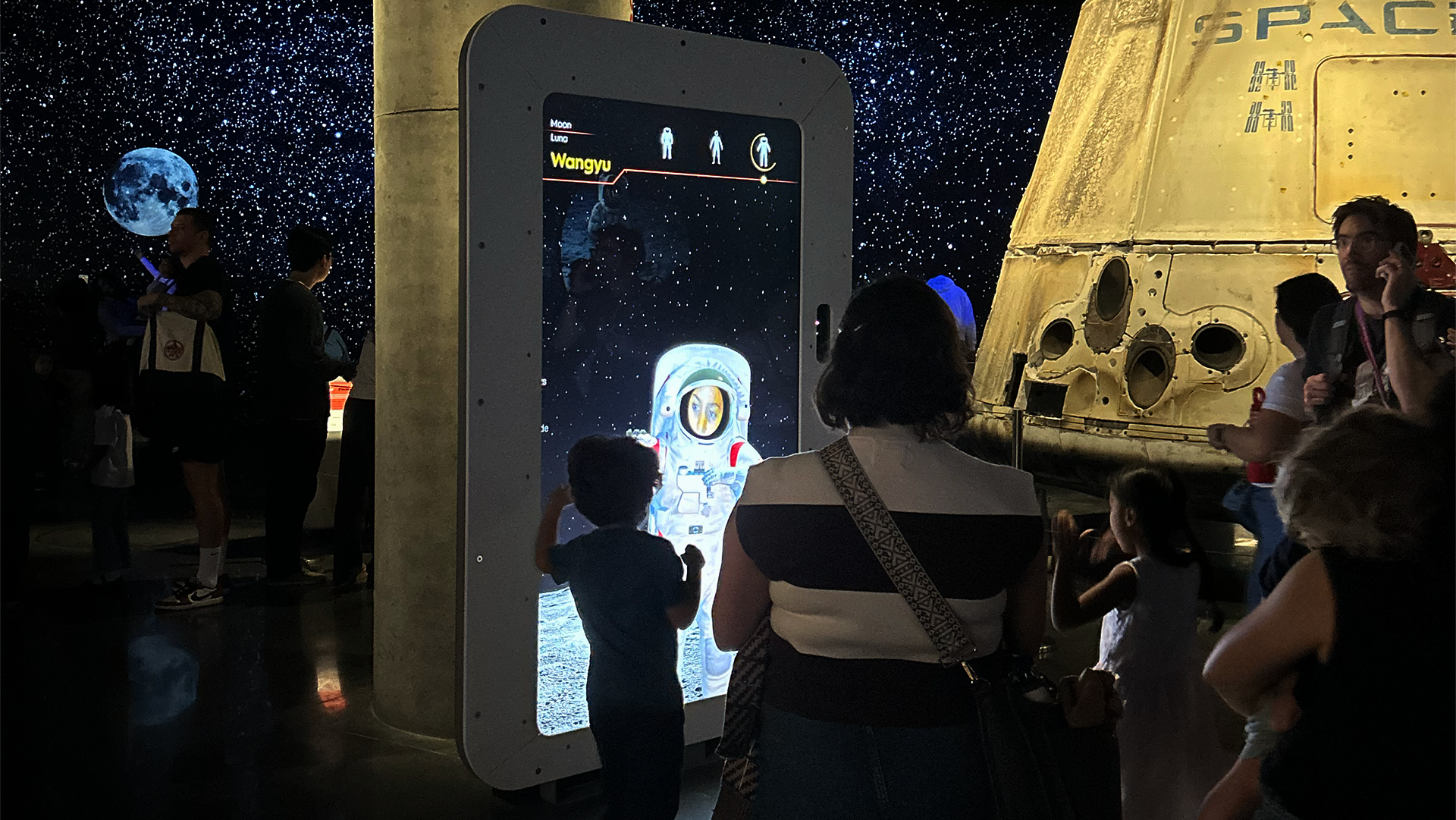
Future Spacesuits lets visitors see themselves wearing a virtual suit that follows their movements. They can try different 3 designs based on real-life spacesuits, investigate what the components do, and discover the tradeoffs involved in protecting an astronaut while allowing them to move and work.
Directing the Mission
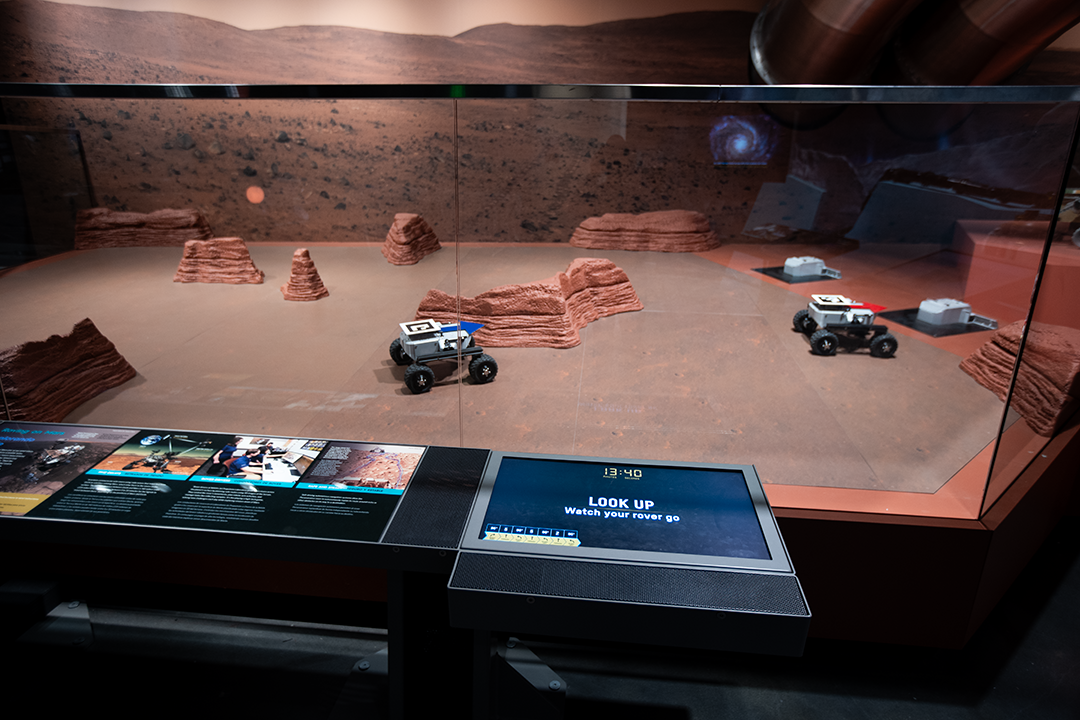
In Program a Rover, visitors build a sequence of commands at a touchscreen, then send those instructions to a model rover moving across a planetary landscape. Watching the rover execute their program introduces the challenge of directing a machine on another planet, where every movement must be planned from a distance.
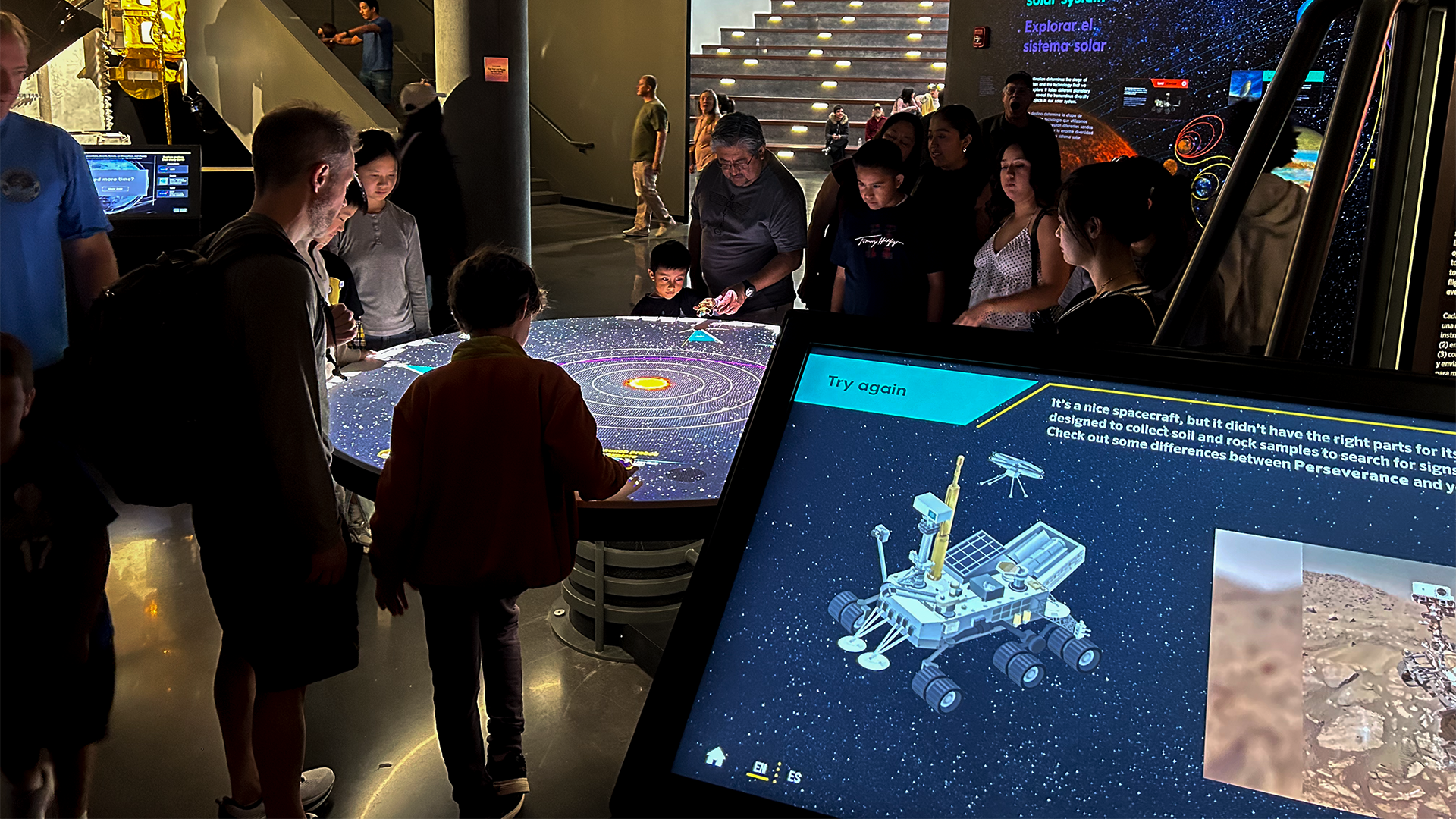
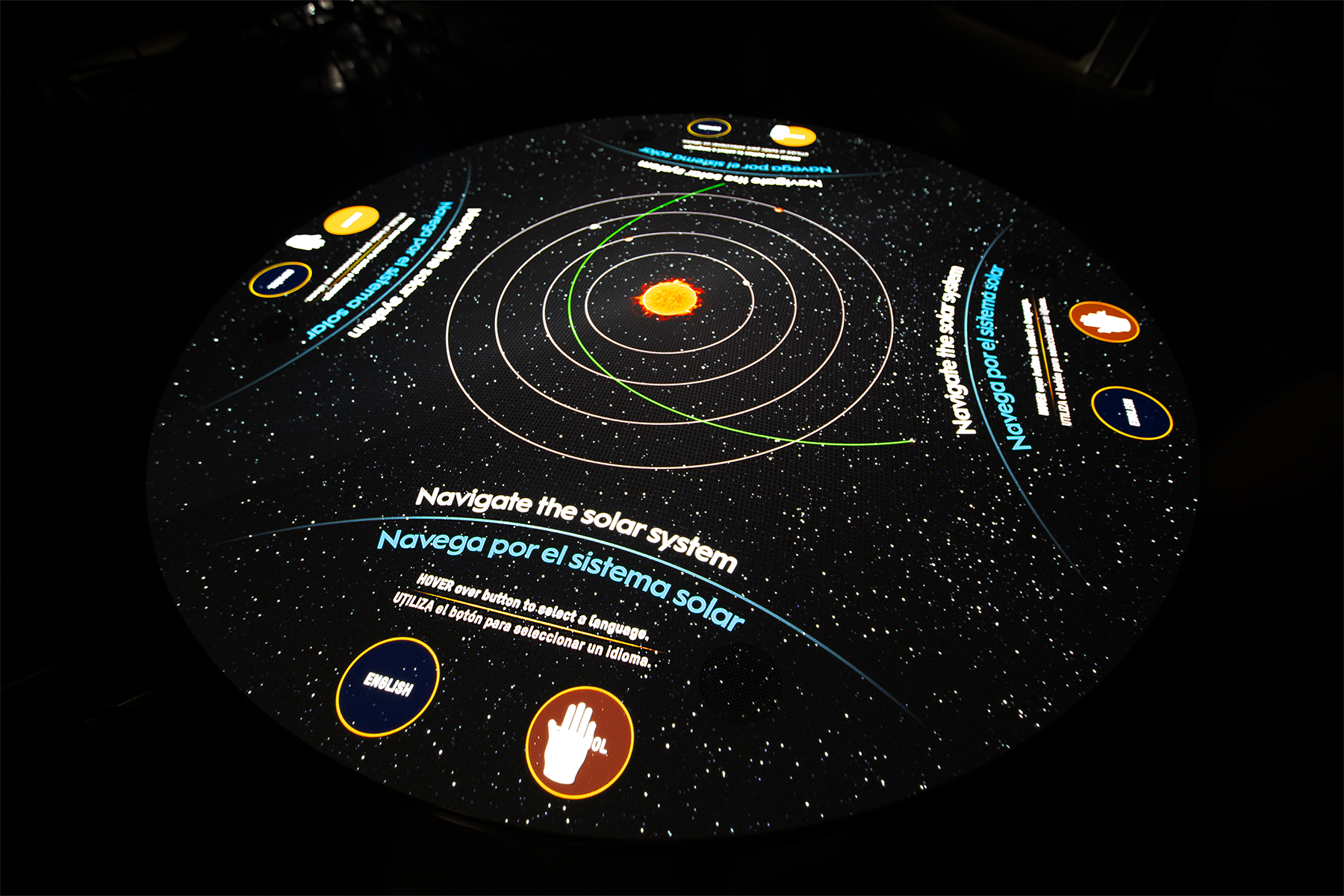
At Navigating the Solar System, a top-down video projection with hand tracking, visitors fling probes into space, experiment with spacecraft trajectories and learn how the gravitational pull of planets and moons can help a probe reach its destination.
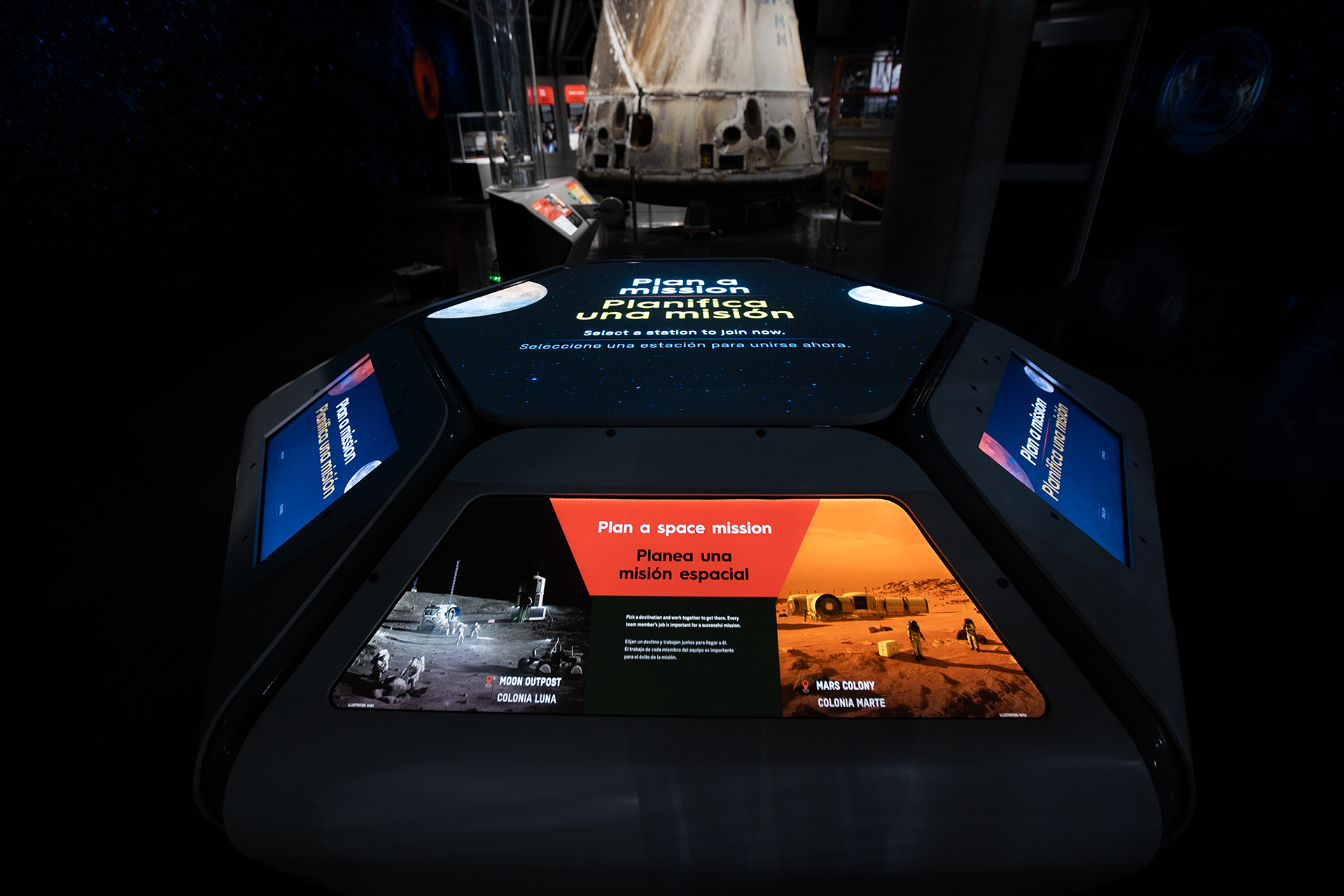
Destinations, our five-person mission-planning experience, brings visitors together at individual touchscreens to plan a journey to the Moon, Mars, or an asteroid. Each participant contributes to the decisions, with the resulting mission playing out on a shared projection.
Earth to the Moon and Beyond
The large-screen film, Earth to the Moon, traces the risks and achievements of human spaceflight through the Mercury, Gemini, Apollo, and Artemis programs. Archival footage, animation, and sound explore the scientific breakthroughs, political ambitions, and human stakes behind the effort to reach the Moon.
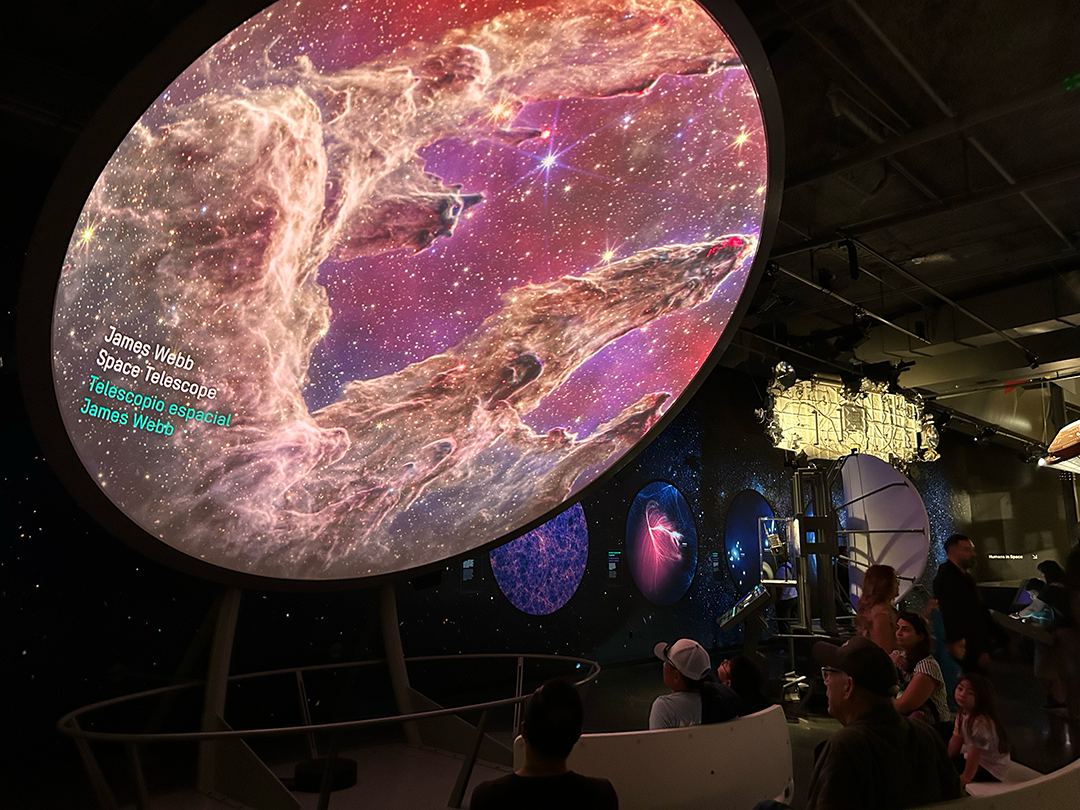
Cosmos unfolds overhead on a domed ceiling. Visitors look up into imagery of planets, stars, and galaxies as the film explores how our instruments have extended our view into space. Animation, historical imagery, and real mission data show how new instruments have changed our understanding of the universe.
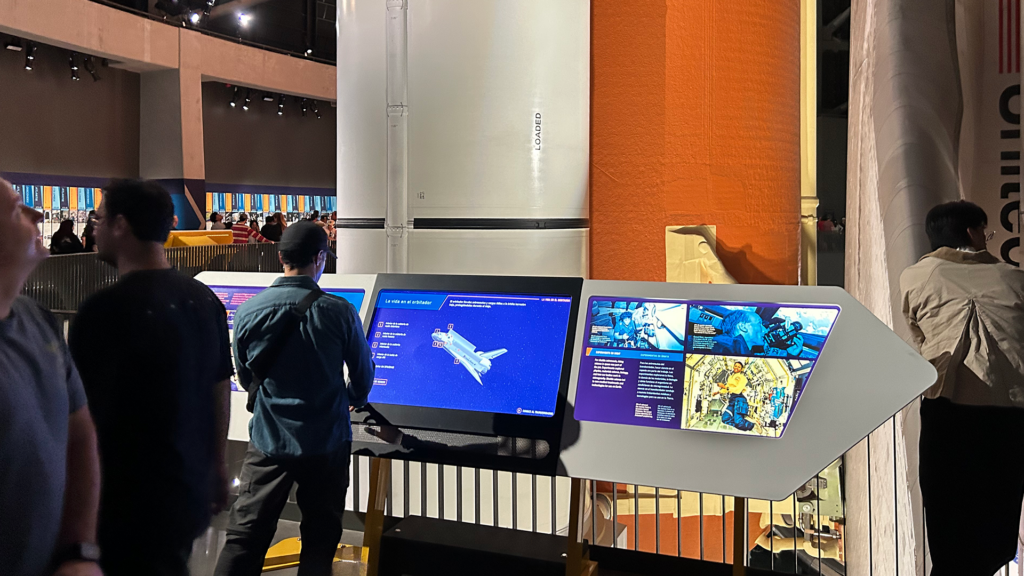
Alongside the aircraft and spacecraft, NLP created supercharged artifact labels that allow visitors to interactively explore the museum’s extensive collection. These Digital Labels explore the missions these crafts served and the engineering behind them. All media is presented in English and Spanish.
Making It Work
Behind each experience was extensive prototyping and playtesting. We tested the physical controls for navigating the ISS, the motion tracking that lets a virtual spacesuit follow a visitor’s body, and the connection between touchscreen commands and a moving rover. The five-person mission-planning experience presented another challenge: helping visitors understand their individual roles while making decisions together.
We refined the controls, instructions, and onscreen responses through repeated testing with the California Science Center team and our project partners, then continued that work during installation. The goal was to have visitors spend their time exploring the science, with interactions that felt natural from opening day.
Project Collaborators
Exhibition design by Evidence Design, audiovisual integration by Electrosonic, and exhibit fabrication by Scenario and Roto. Beaudry Interactive served as our subcontractor for additional experiences elsewhere in the galleries.
square feet of exhibit space
major galleries: aviation, shuttle, space
AV programs
languages: English and Spanish